What Are ChatGPT Ads: All You Need to Know
- by Ilona K.
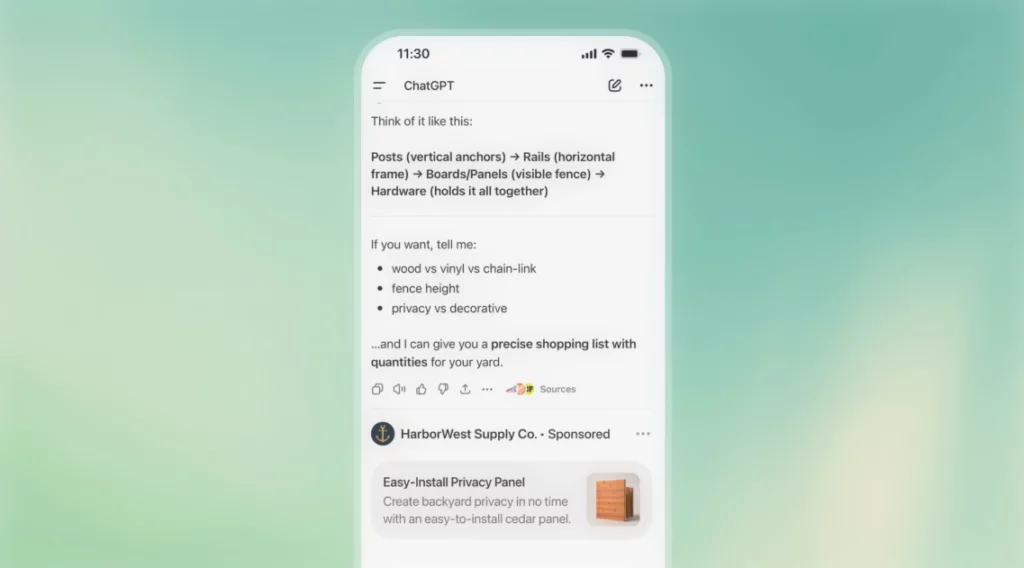
Table of contents
ChatGPT ads introduce a new place for businesses to appear while users in Free and Go plans research products, compare services, and work toward a decision. Unlike a standard search ad, the placement sits below an AI-generated response and uses conversational context rather than exact-match keywords.
Sensor Tower estimated that over 820 companies already advertise on ChatGPT in July 2026. Its report on the biggest advertisers on ChatGPT so far names companies including Home Depot, Intuit, and Booking Holdings.
Learn how ads in ChatGPT work, what ChatGPT ads pricing looks like, and how a small business can set up and measure a campaign. This guide also covers the limits of the platform while it is still in beta as of mid-2026.
What Are ChatGPT Ads and How Do They Work?
ChatGPT ads are paid placements shown below a ChatGPT response. They are labeled as sponsored and kept visually separate from the answer. OpenAI first launched the US test on February 9, 2026, before expanding it into more markets.
Importantly, ChatGPT ads are not shown across every version of ChatGPT. OpenAI currently says ads may appear to users on the Free and Go plans, while Plus, Pro, Business, Enterprise, and Edu remain ad-free.
OpenAI also states that advertisers cannot change, rank, or influence the answer itself. Advertisers also do not receive access to private conversations, chat history, memories, or personal details.
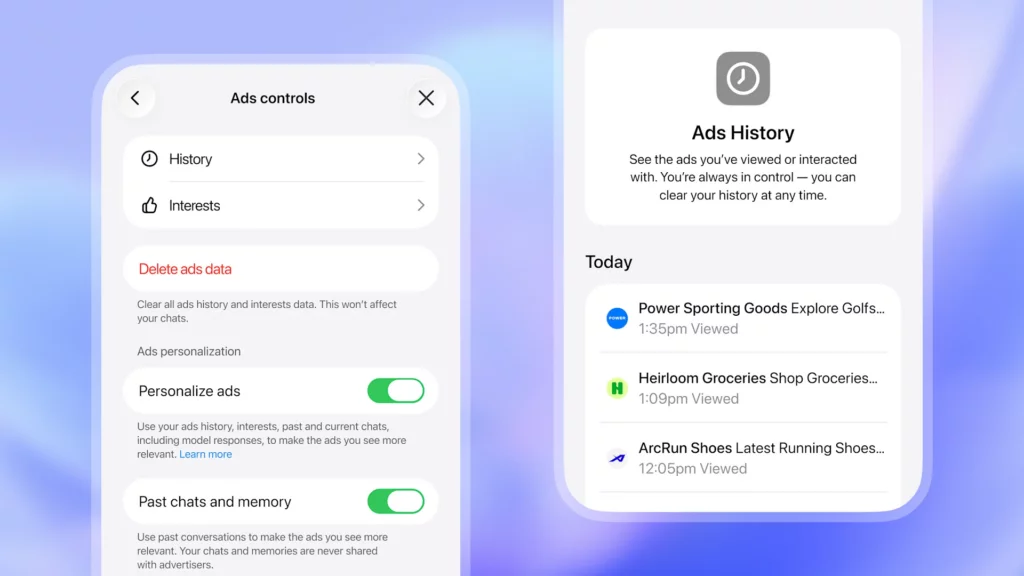
Instead of relying on exact keywords, the system considers the intent and context of a conversation. Advertisers provide “context hints” describing the topics, needs, and situations where an offer may be relevant.
These hints guide matching, but they do not guarantee that an ad will appear for a specific prompt. There is no magic “show my ad every time someone mentions domains” switch.
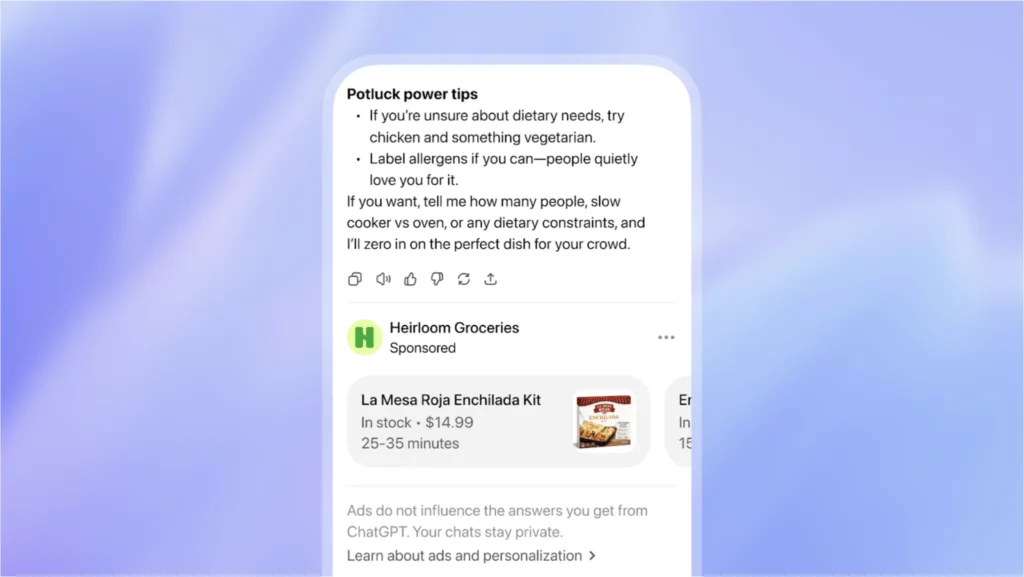
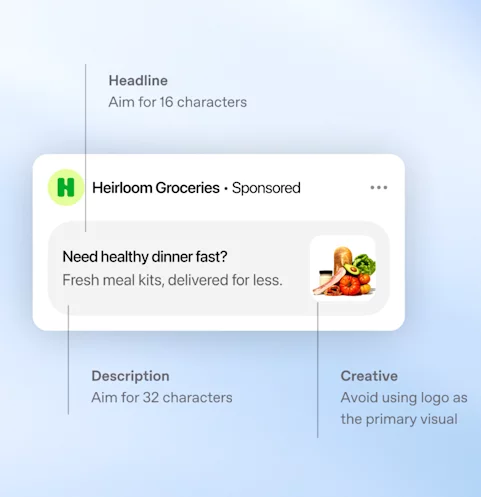
The format can include an advertiser name, favicon, headline, description, image, and landing page. Ads may appear to users on Free and Go plans. Plus, Pro, Business, Enterprise, and Edu accounts remain ad-free.
What Does a ChatGPT Ads Example Look Like?
Imagine someone asks ChatGPT:
“I need an affordable ecommerce website for a small candle business. What should I look for?”
A hypothetical web studio using brightforge.it.com could display this sponsored message below the answer:
Title: Build a store that is easy to manage.
Description: Bright Forge creates simple ecommerce websites for growing businesses. View packages and recent work.
Landing page: brightforge.it.com/ecommerce.
Its context hints could include “small business ecommerce website,” “online store setup,” and “affordable web design.”
The wording describes the customer’s situation instead of attempting to match one exact prompt. OpenAI’s creative guidance favors clear benefits, accurate claims, and landing pages that closely match the ad.
ChatGPT Ads Pricing: What Does It Cost?
ChatGPT ads pricing does not follow one fixed rate. The platform uses an auction and currently supports two main buying options:
- CPM: Payment per 1,000 impressions for reach-focused campaigns.
- CPC: Payment for each valid click for traffic-focused campaigns.
Advertisers set a maximum bid at the ad-group level. OpenAI currently suggests starting CPC maximum bids of $3 to $5 per click. For comparison, the average Google Ads CPC across industries was $5.42, while Meta benchmarks put Facebook CPCs at around $0.70 for traffic campaigns and $1.92 for lead campaigns.
This puts ChatGPT’s suggested starting bid closer to Google Search than Meta, although it is not a direct like-for-like comparison. OpenAI’s $3 to $5 figure is a maximum suggested bid, not the average amount advertisers actually pay, and the final CPC depends on the auction, relevance, and competition.
Conversion-optimized CPC campaigns are also available. These campaigns aim to generate actions such as purchases, sign-ups, or lead submissions, but advertisers still pay per click rather than per conversion.
Budgets can be set for each day or for the full campaign. OpenAI currently uses a postpay model, so charges are made after ads have been delivered and an account reaches its billing threshold.
How to Buy Ads on ChatGPT Step by Step
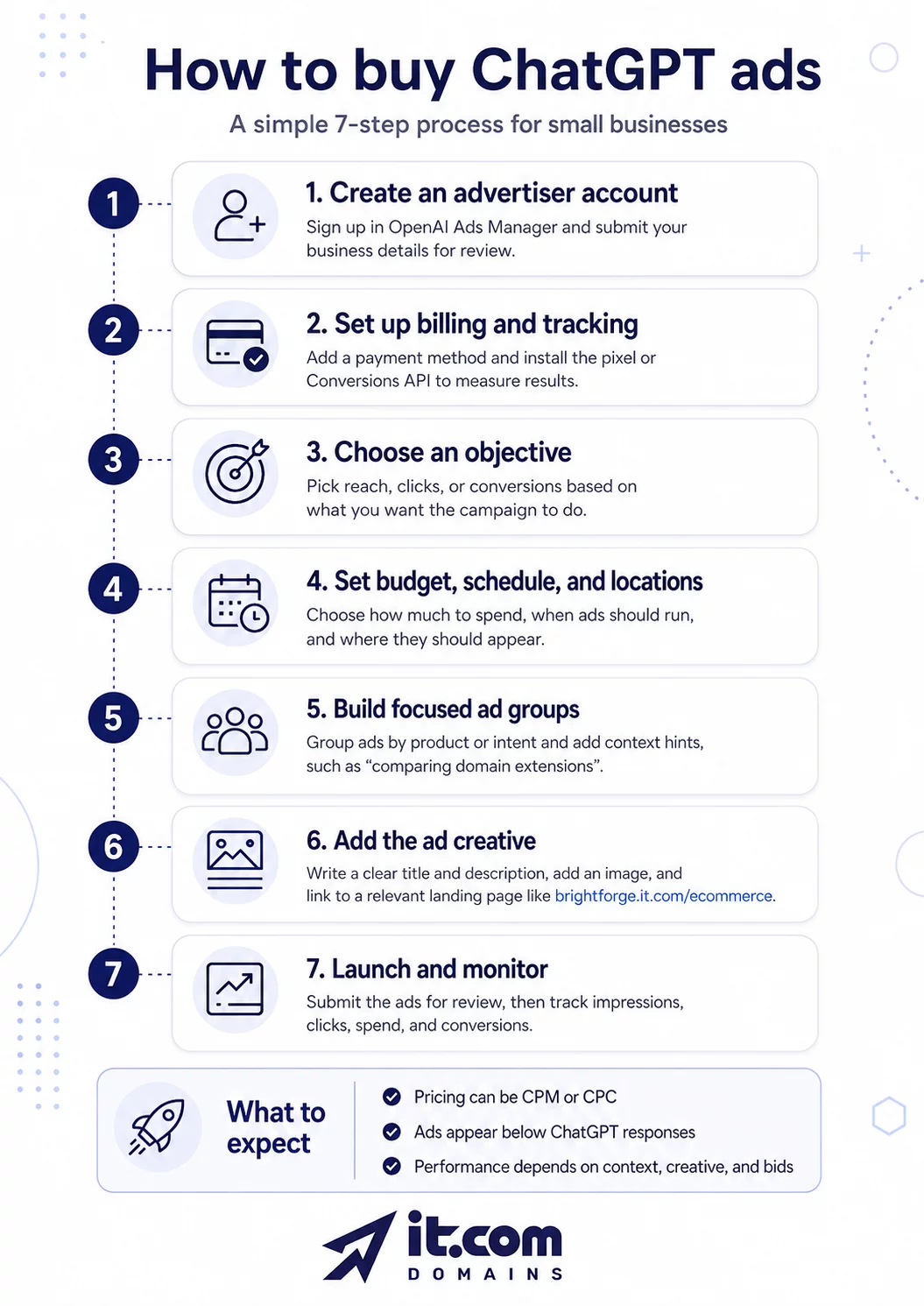
1. Create an advertiser account
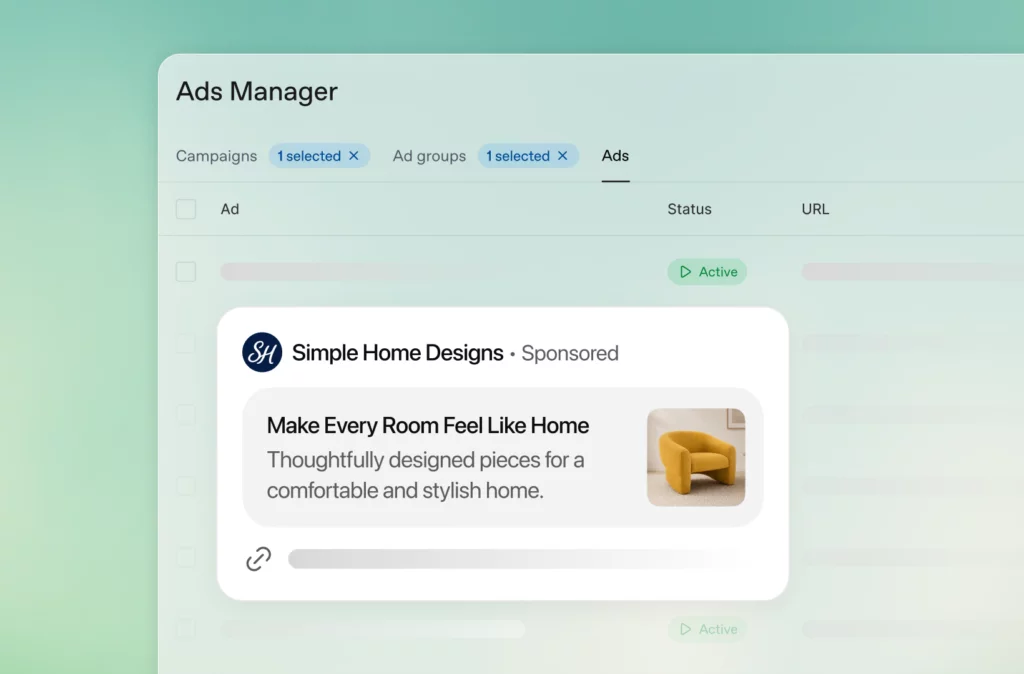
Campaigns are created and managed through OpenAI Ads Manager Beta.
Account setup requires business information such as the company name, website, logo, industry, country, currency, and time zone. OpenAI then reviews the business and checks whether its products or services meet the platform’s advertising policies. OpenAI also lists a ChatGPT ads manager connector alongside its self-serve advertising platform.
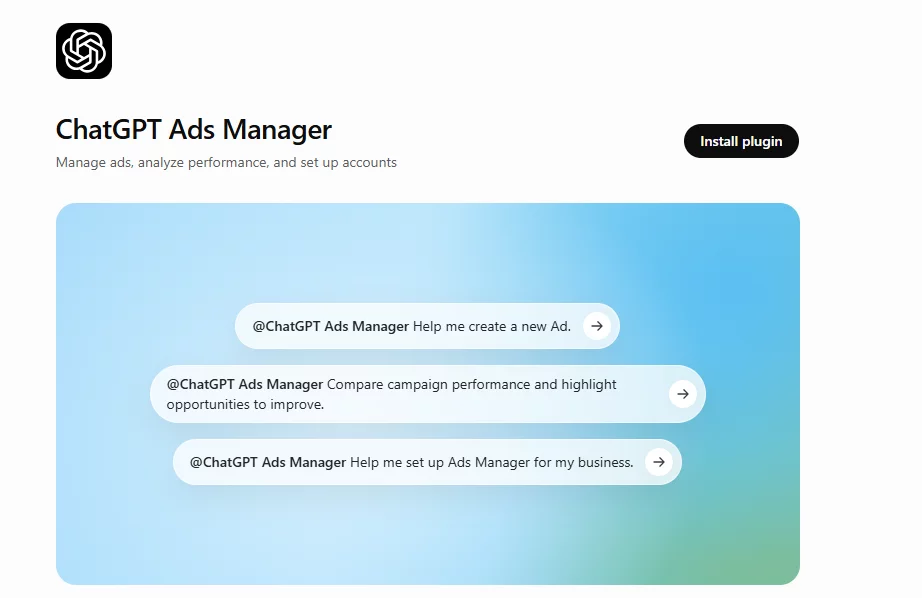
2. Set up billing and conversion tracking
A billing profile and payment card must be added before ads can run. Conversion measurement can use OpenAI’s website pixel, Conversions API, or both. Advertisers can also add UTM parameters to landing-page links, allowing visits and sales to appear in tools such as Google Analytics.
3. Choose an objective
The available objectives include reach, clicks, and conversions. A reach campaign uses CPM pricing. A clicks campaign uses CPC pricing. A conversion campaign uses optimized CPC and requires an eligible conversion event to be configured first. Most recently, OpenAI started testing a new campaign type named Agent, which allows you to send ChatGPT searchers and users to a Business Agent conversation.
4. Select the budget, schedule, and locations
Campaign settings control the budget, start and end dates, and geographic targeting.
Some settings, including the campaign objective, cannot be changed after creation. A different goal may therefore require a new campaign.
5. Create focused ad groups
Each ad group covers one product, service, audience need, or intent area.
Context hints explain the conversations where the offer may be useful. Existing prompt research can help identify realistic language from customer questions, sales calls, community discussions, and search-query reports.
For example, a domain registration ad group might use hints such as:
- Starting a new technology company
- Comparing domain extensions
- Looking for a short business domain
- Choosing a professional website address
6. Add the ad creative
Each ChatGPT ad includes a title, description, image, and landing page. The destination should closely match the promise in the ad. A campaign related to cybersecurity awareness month, for example, could lead to brand.it.com/cybersecurity instead of a general homepage.
7. Submit and monitor the campaign
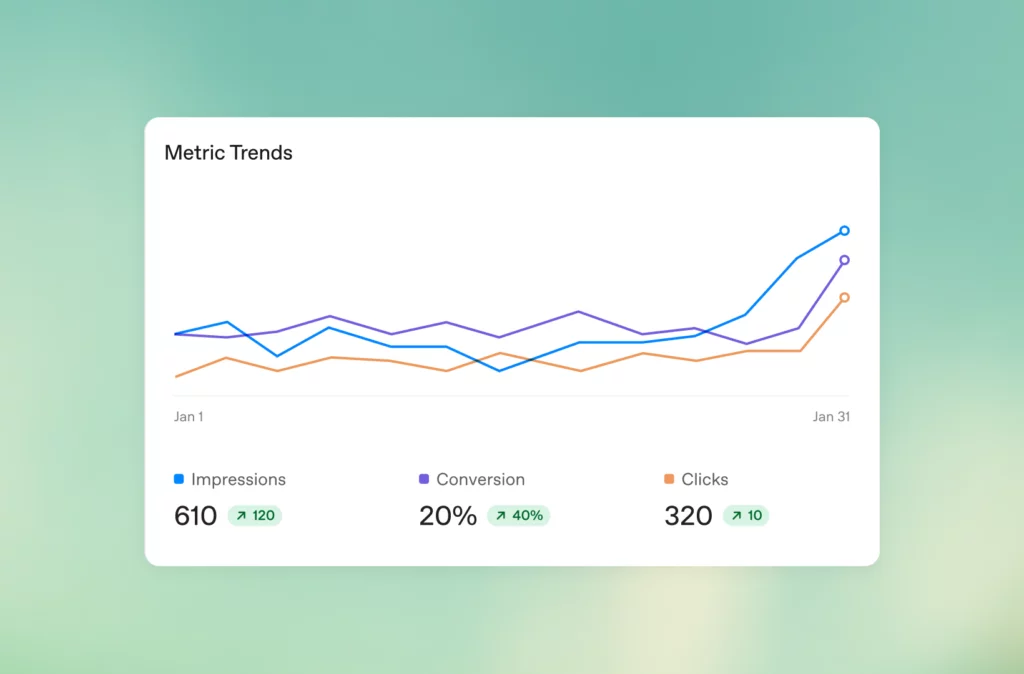
OpenAI reviews ads before they can appear. Ads Manager reports impressions, clicks, spend, click-through rate, average CPC, average CPM, and conversions when tracking is active. Advertisers can also download reports as CSV files or view performance through charts.
How ChatGPT Ads Work with AI Visibility
Paid placement and organic AI visibility serve different purposes. ChatGPT ads buy a sponsored position below relevant responses. Generative engine optimization aims to help AI platforms understand, mention, or cite a business without payment.
The two approaches can form part of the same discovery strategy. Businesses can use generative engine optimization tools to monitor unpaid mentions and compare them with paid campaign results.
Tracking wider performance in AI assistants can also reveal whether ChatGPT visitors click, inquire, or buy after reaching the website.
ChatGPT Ads: the Perspective
ChatGPT ads have an unusual advantage: they can use the context of a conversation to understand what someone is trying to achieve, even when that person has not typed an obvious commercial keyword. 46% of users who eventually saw an ad had started their conversation without commercial intent, while 83% of ad-triggering queries would not have activated a traditional Google Shopping ad.
Early signs of relevance are encouraging too. OpenAI has reported low ad-dismissal rates and improving relevance, while 73% of users continued their conversation after seeing an ad. This suggests the format can feel less disruptive than advertising placed around a traditional search or social feed.
The trade-off is that ChatGPT ads are still a young performance channel. Advertisers have reported limited visibility into the conversations that trigger their ads, fewer optimization controls than Google or Meta, and inconsistent results further down the sales funnel.
One advertiser, for example, reported a four-times lower cost per lead and almost twice the conversion rate of Google, but ultimately paused the campaign because most ChatGPT leads fell outside its ideal customer profile and produced no revenue. That is only one campaign, but it illustrates a wider concern reflected in early advertiser feedback: inexpensive or relevant clicks do not automatically mean profitable customers.
The direction of travel is toward a more sophisticated advertising platform rather than a simple sponsored card below an answer. OpenAI is already adding conversion optimization, richer product carousels and new measurement partnerships, while its advertising policies point toward future sponsored agents that could let people interact directly with a brand’s AI representative.
Data from WPP indicates that AI-driven search placements could expand from 1.9% of search spend in 2026 to 39.2% by 2031, though such long-term projections remain speculative. If these trends continue, ChatGPT ads might emerge as a unique hybrid channel - blending search, commerce, and conversational intent - rather than merely serving as a replica of Google’s advertising model.
FAQs
What are ChatGPT Ads?
ChatGPT Ads are sponsored placements shown below ChatGPT responses. They may include a business name, headline, description, image, and landing-page link. They remain separate from the AI answer, and OpenAI states that advertisers cannot influence the response or access private chats.
How to buy ads on ChatGPT?
An eligible business can create an OpenAI Ads Manager Beta account, complete business verification, add billing details, set up conversion tracking, select an objective, create ad groups with context hints, upload creative, and submit the campaign for review.
How much are ads in ChatGPT?
There is no single fixed price. CPM campaigns charge for impressions, while CPC and conversion-optimized CPC campaigns charge for valid clicks. OpenAI currently suggests starting maximum CPC bids of around $3 to $5, but the auction, competition, and ad relevance affect the final cost.
Which countries are ads in ChatGPT available in?
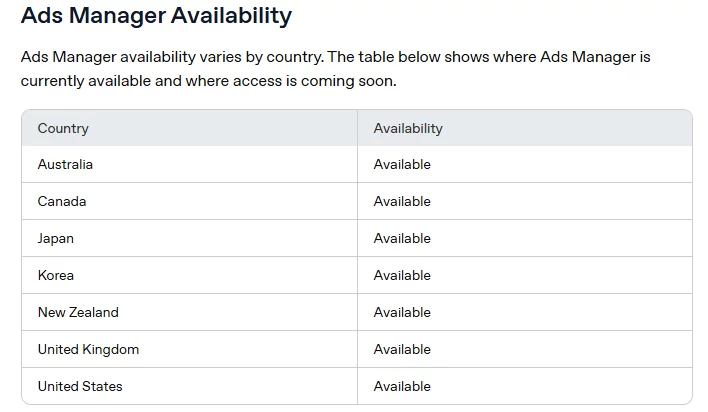
As of August 2, 2026, OpenAI lists self-serve Ads Manager availability in Australia, Canada, Japan, Korea, New Zealand, the United Kingdom, and the United States. OpenAI has also announced an ad-pilot expansion into Mexico and Brazil, although those countries are not currently included on its official self-serve availability list. Availability may continue to change.
Is it worth running ads on ChatGPT?
The answer depends on the business, audience, profit margins, tracking quality, and need for scale. The format may suit products or services that customers research in detail. Businesses that need mature benchmarks, precise keyword controls, or highly predictable traffic may find established advertising platforms easier to evaluate. A controlled test can provide evidence without treating AI ads as a replacement for SEO, paid search, or social advertising.
Need inspiration to grow your brand online? Visit it.com Domains blog and follow us on social media.

Read also
Tips and Tricks
Phishing with Fake Impersonating Domains: How Business Can Recognize It and Guard
- 10 min read

Tips and Tricks
AI Appreciation Day: Top-10 Domain Names for AI Startups on it.com Domains
- 3 min read