How AI and Platform-Led Discovery Are Changing the Role of Domain Names - Simone Catania, InterNetX
- by The it.com Domains Team

Table of contents
- From “Search and Click” to “Ask and Receive”
- The Risk of Building on Rented Land
- Are Businesses Ready for This Shift?
- What Small Businesses Should Consider When Choosing a Domain
- The Domain as Protection Against Fake Brands
- From SEO to GEO: Optimising for Generative Discovery
- AI, Internet Governance and the Future of Digital Identity
- The Future of Domain Names
For years, the role of a domain name was easy to explain. It was the address people typed into a browser, the link they clicked in search results, or the name printed on business cards, packaging and ads. None of that is going away but online discovery is changing the rules.
People no longer find businesses only by typing queries into search engines. They ask AI assistants for recommendations. They discover brands through social platforms, marketplaces, maps, review sites, voice search and app ecosystems. In many cases, the first impression no longer happens on the company’s own website.
So, where does that leave the domain name?
According to Simone Catania, Global Content & Communications Manager at InterNetX, the domain is not becoming less important. It is becoming important in a different way.
“Even when no one types a URL anymore, the domain underpins the email, the certificates, the API endpoints and the machine-readable signals that AI systems use to judge what is authentic,” he says. “So the role of the domain in the AI-driven web shifts from ‘the address you visit’ to ‘the identity layer that AI resolves and verifies against.’
Simone works at the intersection of DNS, the domain industry and the wider internet ecosystem. At InterNetX, a brand of the IONOS Group, he leads content and communications and acts as a domain expert across the group’s communications and PR team. He also serves as a EURALO Board Member within the ICANN ecosystem, contributing to multistakeholder discussions on internet governance and policy.
In the interview with it.com Domains, he explains why AI-led discovery is changing the role of domains, why businesses need to think beyond “short and available”, and why the future of online trust may depend on keeping digital identity anchored in open infrastructure.

From “Search and Click” to “Ask and Receive”
The traditional search journey was familiar: a person typed a query, reviewed the results, clicked a website and made their own judgement. AI is compressing that journey.
“For years we measured a site by human visits; increasingly its job is also to be the authoritative, machine-readable source that AI systems read, cite and trust when they answer on your behalf,” Simone explains.
“The shift is happening faster than most people assume,” he says. “Across markets, users are already turning to AI assistants for a direct answer instead of scrolling through a page of blue links, and within a couple of years that behavior will feel completely normal rather than novel.”
“For businesses, this means visibility is about being the source an AI system can understand, trust, and surface,” he explains. “In that environment, a domain stops being a simple address you type and becomes a credibility signal that machines read.”
That creates a practical opportunity. Businesses that keep their websites clear, structured and up to date may be easier for AI systems to understand and reference.
“That makes structured, well-maintained content on your own domain a real competitive advantage, because it shapes what the machines say about you. Because a summary still has to point somewhere, and that somewhere is a domain,” Simone says.
AI need signals that help them understand whether information is reliable, current and connected to the real organisation behind it. The domain is one of the most stable identifiers in that chain. This is why the domain’s role is evolving.
“A destination is something a human navigates to; a domain as a trust anchor is something both people and machines rely on to confirm that an identity is genuine, consistent and accountable,” he says. “Your domain is what your email authentication, your TLS certificates and your verified presence across platforms all attach to. It is the root of your digital identity rather than just a doorway to a website.”
Simone points to the Global Domain Report 2026, produced by InterNetX with Sedo, which looks at domain market data, trends and strategies.
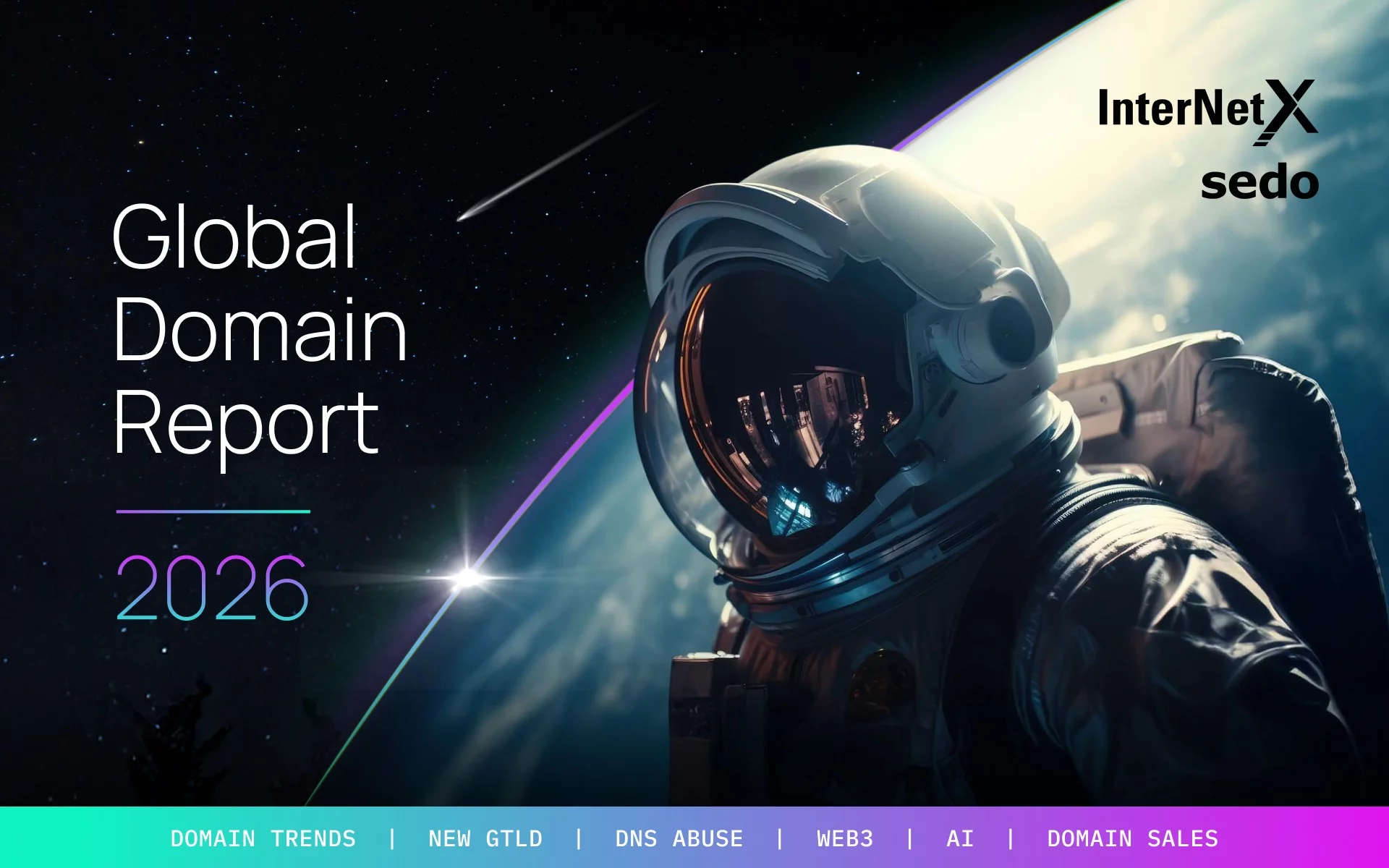
“The web will increasingly reward domains that machines trust, not only the ones humans happen to remember,” he says. “In our industry survey, 66% of respondents reported that AI is already actively impacting their domain demand, sourcing, or sales. Furthermore, 44.4% see the greatest immediate potential in AI-driven name generation to streamline how brands are discovered.”
“Companies that treat their domain as part of their trust and identity strategy, rather than an afterthought, will be the ones that AI-led discovery keeps recommending,” Simone says.
The Risk of Building on Rented Land
AI is only one part of the discovery shift. Businesses are also increasingly discovered through platforms they do not own: social media, marketplaces, maps, directories, review platforms and app ecosystems. These channels create dependency.
“The core risk is that you are building on rented land,” Simone says. “When a platform owns the first impression, a marketplace, a social feed, a maps listing, a review site or an AI assistant, it also owns the relationship, the data and the rules, and those can change overnight through an algorithm tweak, a policy shift, a fee increase or an account suspension you have no say over.”
This does not mean businesses should avoid platforms.
“Platforms are powerful for reach, but they intermediate your audience and can deprioritize or replace you at will,” Simone says. “This is why the domain should be the center of gravity for everything else: it is the one asset you actually own, and your website, your email, your campaigns and even your platform profiles can all anchor back to it.”
For small businesses, this is a useful way to think about channel strategy: use platforms for discovery, but use your domain as the hub.
“Treat the domain as the hub and the platforms as spokes that point to it, and you keep a direct, durable relationship with your audience no matter how the platforms evolve.”
Are Businesses Ready for This Shift?
Not all businesses are thinking this way yet. While some domain experts are looking at how domains function as trust layers for AI systems and autonomous agents, many end users are still catching up.
“But the gap is closing quickly,” Simone says. “The domain and DNS community has spent more than two decades adapting to constant change, from the rise of new gTLDs and internationalized domains to DNSSEC, the move to HTTPS everywhere, and email-trust standards like SPF, DKIM and DMARC.”
He sees this ability to adapt as one of the industry’s strengths. This was also the thinking behind the theme of the InterNetX Domain Summit 2026 in Berlin: Digital Metamorphosis.

“End users and many businesses are not fully there yet, but they will be soon: the familiar pattern of ‘type a query, scan a list of results, click a domain’ is already being reshaped, and most people will only notice once it has become the norm.”
What Small Businesses Should Consider When Choosing a Domain
For small businesses, domain advice often starts with familiar points: keep it short, make it memorable, avoid confusing spelling and choose something available. Simone believes businesses need to go further.
“In 2026 a small business should treat the domain as a long-term identity and trust asset” he says. “Brandability and semantic clarity matter for machines as much as for humans: a clear, distinctive name is easier for both users and AI systems to associate with your business.”
“Coverage is the next consideration: securing the exact-match across the extensions and close variants that matter to you, with a consistent handle across email and social, so your identity holds together,” he says.
The domain extension is also part of the brand signal. “It signals something about who you are and who you're speaking to, so it's worth picking one whose meaning and reputation fit your business rather than defaulting to whatever happens to be free.”
Finally, small businesses should look carefully at the registrar behind the domain.
“Pick a registrar that takes security and compliance seriously: DNSSEC, solid email authentication and security practices aligned with evolving regulation, such as the EU's NIS2, because in 2026 those trust signals are part of the domain's value.”

The Domain as Protection Against Fake Brands
AI has made it easier to create convincing content at speed. That includes useful content, but also fake websites, phishing pages and impersonation attempts. Fake businesses can mimic your brand, but they cannot easily take control of the real domain.
“When anyone can spin up a convincing fake site or a synthetic version of a brand in minutes, the domain becomes one of the few signals that is hard to fake and easy to verify: it is registered, it is owned, and it carries a traceable chain of accountability,” Simone says.
“Impersonators can copy a logo and clone a layout, but they cannot easily claim your verified domain and the trust signals tied to it,” he adds. For a business, this means domain strategy should include more than choosing a nice name.
“A business that holds its exact-match brand domain, secures close variants defensively, deploys DNSSEC and strong email authentication, and presents that same domain consistently everywhere gives both users and AI systems a reliable reference point for ‘this is really them,’” he explains.
For a startup or small business, domain management may begin with one primary domain. But as companies expand into new markets, products, campaigns or countries, domain ownership can quickly become more complex. The risks are practical.
“When registrations are scattered across different providers, it's easy to lose track of what you own: renewals get missed and valuable names lapse, security settings drift out of sync, and lookalike domains slip in around your brand without anyone noticing,” he explains.
“The point of portfolio management is to bring that sprawl back under a single view, consistent ownership and renewals, uniform DNS and security policies such as DNSSEC and email authentication applied across every name, and a sensible layer of defensive registrations around the brands and campaigns that matter,” Simone says.
“As volumes grow, this is also where automation and centralized control become necessary rather than nice-to-have, which is the gap that dedicated management platforms like InterNetX's AutoDNS are designed to fill” he adds. “Handled this way, a domain portfolio shifts from a recurring maintenance burden to a coordinated identity and trust layer that scales with the business instead of lagging behind it.”
From SEO to GEO: Optimising for Generative Discovery
Search engine optimization is also changing. Businesses need to be understood across AI assistants, social platforms, marketplaces, maps and other discovery environments.

“The first thing to recognize is that SEO is broadening into what's called GEO, generative engine optimization,” Simone says.
“The smart move is to make your own domain the constant that every channel resolves back to. Practically, that means publishing structured, machine-readable information on your domain, keeping your identity and facts consistent everywhere they appear, and treating owned channels like your site and email as the authoritative record that the engines learn from,” he explains. “The platforms will keep changing how they rank and recommend, but a strong, well-maintained domain is the one signal you can carry across all of them.”
For businesses that want to improve AI-led discovery, Simone recommends starting with the basics: the domain, the website and the trust signals around them. His practical advice includes several key steps:
- Own and consolidate your domain. Businesses should secure their exact-match name where possible, redirect key variants and subdomains, and make the main domain the hub that other channels point back to.
- Make the site machine-readable. Clear structure, metadata and schema markup help AI systems understand who the business is, what it offers and why it is credible. Simone also mentions emerging conventions such as llms.txt, describing it as “an early but low-cost way to hand agents a curated view of your key content.”
- State your facts first-hand. Core business information such as products, services, locations, policies and expertise should live on the company’s own domain, rather than being left for third parties to infer.
- Lock down trust signals. DNSSEC, HTTPS and strong email authentication, including SPF, DKIM, DMARC and increasingly BIMI, help users and machines verify that a business is authentic.
- Stay consistent everywhere. Business names, descriptions, locations, contact details and brand signals should align across platforms, directories and profiles.
- Choose reliable infrastructure. As Simone puts it, “A registrar with solid security and compliance practices, like InterNetX, keeps the foundation reliable as discovery keeps shifting.”

AI, Internet Governance and the Future of Digital Identity
The rise of AI-led discovery is not only a technical or marketing issue. It also raises questions about who controls visibility, who defines trust and how users are represented when digital identity is mediated by large platforms.
“Speaking from the At-Large side of ICANN, where EURALO represents the interests of individual Internet users in Europe, my starting point is that AI's impact on the web is also a social question, not just a technical one,” he says.
One of the major risks is centralisation.
“As discovery shifts from open search to a handful of AI assistants, there's a real risk that the power to decide who is ‘verified,’ visible and trustworthy concentrates in a few private AI platforms, and that's the kind of centralization the multistakeholder model exists to push back against,” Simone says.
“The conversation the domain industry needs to have is about keeping identity and trust anchored in open, accountable infrastructure like the DNS, rather than in proprietary systems that ordinary users can neither see into nor contest,” he explains.
That conversation must include more than registries, registrars and large technology platforms. It must also include end users.
“Concretely, ICANN and DNS stakeholders should be asking how end users stay represented as AI reshapes the namespace, how we extend trust signals like DNSSEC and verified identity in ways that remain interoperable and inclusive; and how policy keeps pace without locking in today's gatekeepers.”
The strength of the DNS, Simone argues, is that it has remained open and globally accountable. “It is governed through a bottom-up, multistakeholder model, and that openness is exactly what we need to defend as AI mediates more of the web.”
If domains are becoming part of identity and trust infrastructure, the domain industry also needs to evolve.
“The first move is a mindset shift: registrars, registries and infrastructure players need to stop thinking of themselves as sellers of addresses and start acting as providers of identity and trust infrastructure,” Simone says.
“That means making security and verification the default rather than an upsell: DNSSEC, robust email authentication, abuse mitigation and regulatory compliance, NIS2 in the EU, with equivalent frameworks emerging elsewhere, built into the baseline,” he says. “That way every domain carries the signals AI systems rely on to decide what's authentic.”
The industry also needs to prepare for a world where machines and agents interact with infrastructure at scale.
“It also means investing in automation, structured data and machine-readable provisioning, because a discovery environment driven by agents and assistants rewards infrastructure that machines can query and trust,” Simone says.
“Just as important is staying engaged in the policy conversation, on agent discovery, verified identity and how the namespace evolves, rather than waiting for platforms to set the terms.”
“InterNetX is one example of a registrar leaning into this shift rather than resisting it, convening the industry around these questions and treating domains as a trust layer for the AI web; that kind of forward posture, paired with a clear-eyed read on where the market is actually heading, is what separates the players who stay relevant from those who get abstracted away.”
The Future of Domain Names
AI may change how people discover businesses. Platforms may control more first impressions. Search may become more conversational, summarised and agent-led.
But none of that removes the need for a stable, ownable digital identity.
If anything, it makes that identity more important.
The domain name is evolving from a web address into a trust anchor: a signal that helps people, platforms and AI systems understand who a business is, whether it is authentic and where its verified information lives.
For small businesses, the lesson is practical. Choose a domain with long-term identity in mind. Keep your website clear, structured and up to date. Make your domain the hub of your digital presence. Secure it properly. Keep your brand signals consistent everywhere.
Because in the AI-led web, visibility will not only depend on being found. It will depend on being trusted.
Keen to hear from industry experts? Visit it.com Domains blog and follow us on social media.
Read also

Expert Opinion
How Premium Domains Become Digital Assets, - Aron Meystedt, Owner of Symbolics.com
- 12 min read

Expert Opinion
- 5 min read