What Makes a Domain Name Valuable
- by Ilona K.

Table of contents
A domain name can be much more than a web address. That is why two domain names can have very different prices, even if they look similar at first glance.
Let’s decode what makes a domain name valuable, how domain name valuation works, and what business owners can check before comparing a domain price.
What Gives a Domain Name Value?
The global domain market is still growing. 2025 ended with 386.9 million domain name registrations across all top-level domains. The same report notes that publicly reported domain sales above $100 reached $314.7 million in 2025.
That does not mean every domain is worth thousands of dollars. Many domains sell for modest prices. A smaller number become premium assets because they match a popular industry, brand idea, search term, or buyer need.
A buyer may look at a premium domain name because it offers a stronger starting point than a newly invented name. A seller may consider listing a domain if the name has clear demand and they are not using it.
For example, cloudsoftware.it.com may appeal to a SaaS business because it clearly signals the sector. studio.it.com may feel more flexible because it could work for design, media, music, fitness, or creative services. Different buyers may value each name differently.
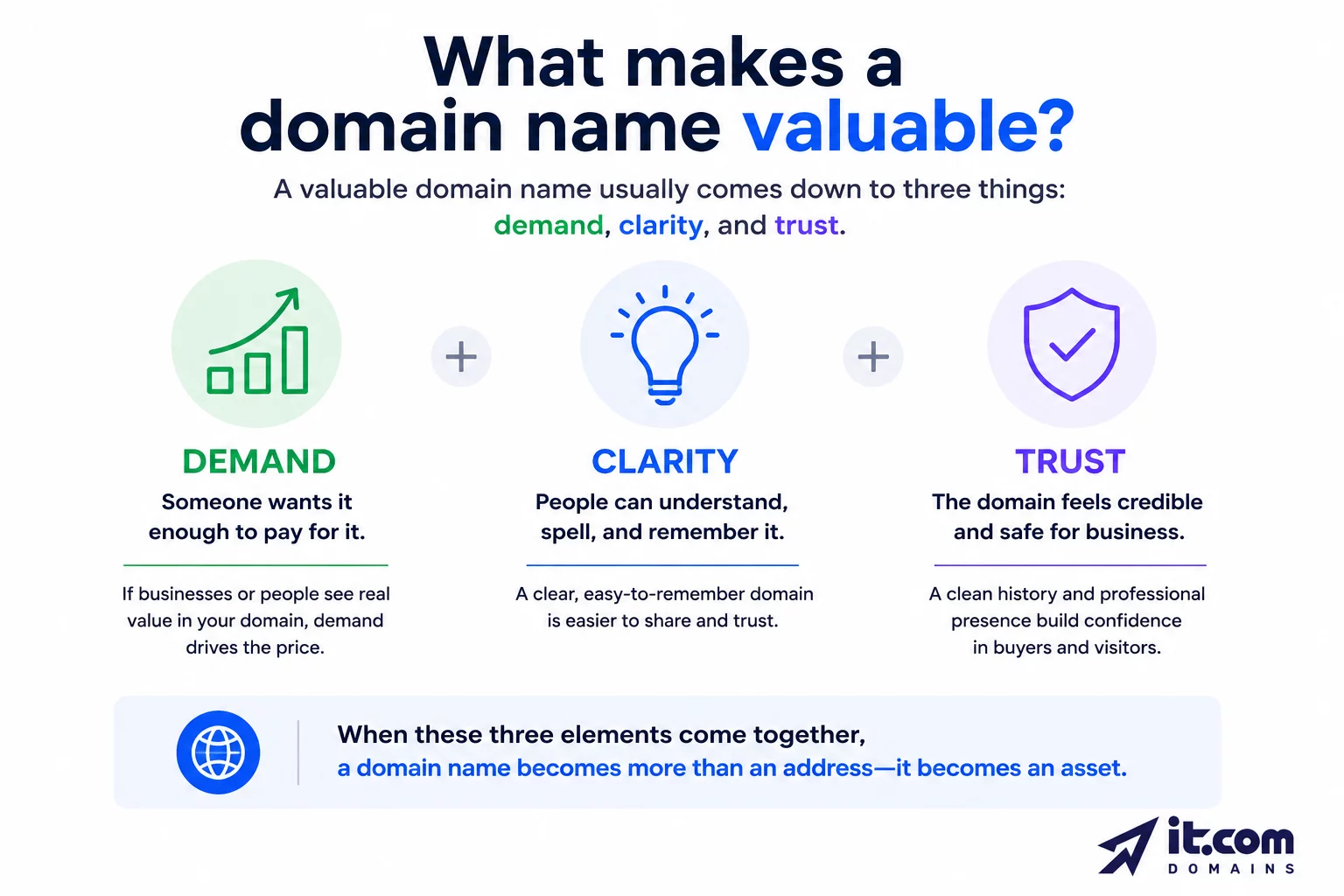
A valuable domain name usually combines three things: demand, clarity, and trust. Demand means someone wants it enough to pay for it. Clarity means people can understand, spell, and remember it. Trust means the domain feels credible for the business or purpose behind it.
Key Factors in Domain Name Valuation
Length and Memorability
Short domains are often easier to remember, type, and share. That can make them more attractive to buyers.
A name like nova.it.com is quicker to say than novabusinesssolutionsonline.it.com. It also leaves more room for the brand to grow. Short does not automatically mean valuable, but it often helps.
A strong domain should pass a simple “radio test”: if someone hears it once, can they spell it correctly without needing a slow explanation? If the answer is yes, the domain has a useful advantage.
Brandability
Brandability is the “does this sound like a real business?” test.
A brandable domain name feels natural, confident, and easy to use on a website, email address, ad, or business card. It does not need to describe every service in detail. In fact, being too literal can sometimes limit future growth.
For example, brightlegal.it.com gives a clear professional feel, while cheap-fast-legal-documents-online.it.com may feel crowded. The second name explains more, but it asks the reader to work harder.
Keywords and Search intent
Keywords can increase domain name value when they match what people search for and what businesses sell. A domain with a useful commercial phrase can feel more relevant to a buyer.
For example, cybersecurity.it.com, taxadvisor.it.com, or aitools.it.com may attract attention because they connect to clear business categories.
However, keywords alone do not guarantee a high domain price. The phrase needs to make sense, have market demand, and fit a real business use case. A keyword-rich name with awkward wording may still struggle.

Domain Extension
The extension, also called the TLD, affects how people perceive a domain. Some extensions are widely recognized, while others work well for specific industries, locations, or naming styles.
A name using .it.com can be useful for businesses that want a short, professional-looking domain with a familiar structure. It can also support creative examples such as build.it.com, secure.it.com, or launch.it.com, where the name reads like a phrase. When comparing options, it helps to look at both the name and the extension together.
Market Demand and Trends
Domain value changes with demand. If more companies enter a sector, domain names linked to that sector may become more desirable.
AI, cybersecurity, fintech, ecommerce, health tech, and creator tools are examples of areas where buyers often look for clear, memorable names. The aftermarket domain sales also highlight how AI-related names have become part of broader domain strategy, not just short-term speculation.
Market timing matters. A domain linked to a fast-growing industry may attract more interest today than it did five years ago. The reverse can also happen if a trend fades.
Existing Traffic, Backlinks, and History
Some domains have a past life. They may already have backlinks, search visibility, direct visits, or brand mentions. These signals can increase domain name value, especially when they come from reputable sources.
There is one important caution: history can help or hurt. A domain that was previously used for spam, scams, or low-quality content may carry risk. Before buying a domain name someone already owns, it is worth checking its past use, backlink profile, and search reputation.
Tools such as archive viewers, SEO platforms, and marketplace data can help build a clearer picture. A valuation guide can also help explain how traffic, backlinks, comparable sales, and market demand fit into a wider domain valuation process.
How to Estimate a Fair Domain Price
Domain appraisal is not an exact science. It is more like estimating the value of a storefront, a brand name, and a marketing shortcut all at once.
Step 1: Check the basic quality of the name
Start with simple questions:
- Is the domain short enough to remember?
- Is it easy to spell?
- Does it avoid confusing numbers, hyphens, or unusual wording?
- Does it fit a real business category?
- Could it still work if the business grows?
For example, greenhomes.it.com is clear and flexible. bestgreenhomesnearme2026.it.com is more limited and may age quickly.
Step 2: Research comparable sales
Comparable sales show what similar domains have sold for. This helps ground the valuation in real market behavior rather than wishful thinking.
Look for names with similar length, topic, extension, and commercial use. A domain in insurance, finance, or software may not compare fairly with a hobby blog domain.
Resources such as EuroDNS explain how length, memorability, keywords, extension, and brand fit can all shape domain value.
Step 3: Use more than one appraisal tool
Automated domain appraisal tools can be helpful, but they should not be treated as the final truth. Different tools weigh factors in different ways.
One tool may focus on keyword demand. Another may focus on past sales. Another may place more value on extension or length.
A better approach is to compare several estimates, then review the domain manually. If a tool says a domain is worth $8,000 but there are no similar sales, no traffic, and no obvious buyer market, that number may need a second look.

Step 4: Check buyer demand
A domain is only worth what a buyer is willing to pay. That buyer may be a startup, local business, investor, agency, or larger company protecting its brand.
One useful exercise is to list possible buyers. For bookkeeping.it.com, potential buyers might include accounting firms, bookkeeping software companies, consultants, or training providers. If the list is long and realistic, demand may be stronger.
It can also help to check who owns a domain name when researching comparable domains or exploring purchase opportunities.
Step 5: Consider the cost of alternatives
A domain price can look different when compared with the cost of other marketing activities.
If a business pays thousands of dollars each month for ads, a memorable domain may have long-term value as a brand asset. If the domain is only for a side project with no clear plan, a lower-cost option may be more suitable.
The key is to compare the domain with the business goal, not just the price tag.
Useful AI Prompts for Domain Valuation Research
AI tools can help organize thinking, but they should not replace market data. These prompts can support early research:
Prompt 1:
“Assess the domain name [example.it.com] for memorability, brandability, spelling clarity, and possible business use cases. Give a neutral view of strengths and weaknesses.”
Prompt 2:
“Create a checklist for evaluating the domain price of [example.it.com], including comparable sales, keyword demand, buyer intent, extension fit, and domain history.”
Prompt 3:
“List possible buyer types for [example.it.com] and explain why each buyer may or may not find the domain valuable.”
Prompt 4:
“Compare [domain1.it.com], [domain2.it.com], and [domain3.it.com] for a small business website. Score each for clarity, trust, memorability, and growth potential.”
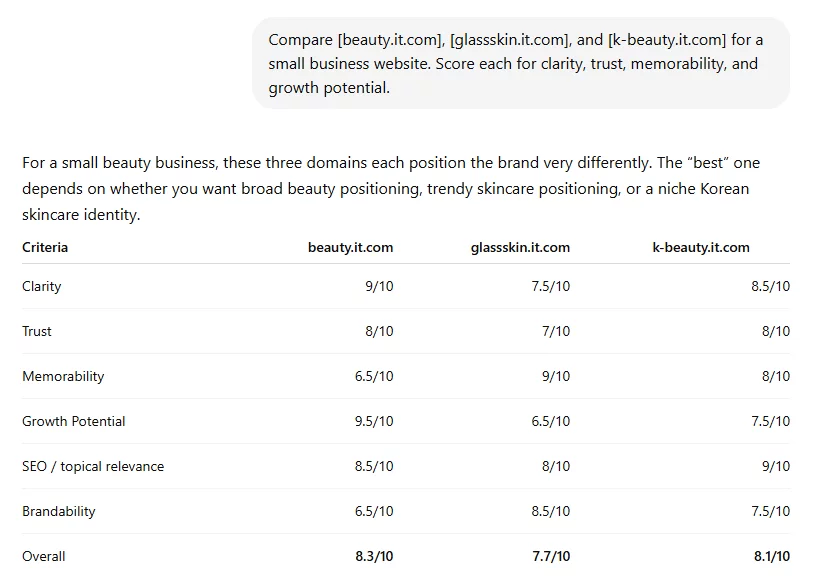
These prompts can make research faster, but final decisions should still include real sales data, legal checks, and a practical view of business fit.
A valuable domain name is usually short, clear, memorable, relevant, and trusted by the audience it needs to reach. Domain name valuation depends on several factors, including keywords, extension, comparable sales, buyer demand, traffic, backlinks, and past use.
For small businesses, the most useful domain is not always the most expensive one. It is the name that supports the brand, fits the market, and gives customers a clear path to find and remember the business online.
FAQs
What makes a domain name valuable?
A domain name becomes valuable when it combines memorability, brand fit, clear wording, market demand, and trust. Short names, strong keywords, relevant extensions, clean history, and existing traffic can all increase domain name value.
Is it worth selling a domain name?
Selling a domain name may be worth considering if the domain is unused, has market demand, and could bring more value as a sale than as a future business asset. The decision depends on the likely sale price, holding costs, and whether the owner has plans for the domain.
What is a fair price for a domain name?
A fair domain price depends on comparable sales, domain quality, buyer demand, extension, traffic, backlinks, and negotiation context. Automated appraisal tools can provide a starting point, but real market data and manual review usually give a more balanced view.
Want to learn more about domain strategy in business? Visit it.com Domains blog and contact us on social media.

Read also

Tips and Tricks
Phishing with Fake Impersonating Domains: How Business Can Recognize It and Guard
- 10 min read